

A lot of people feel like they’re struggling to keep up with AI. It feels like things change every week if you read X or LinkedIn. In reality, meaningful capability changes only happen a couple times a year. What changes weekly is how much noise there is. The real question isn’t “How do you keep up with AI?” It’s where you choose to sit on the signal to noise curve.
I think about AI adoption using a simple model: the Signal to Noise Curve.
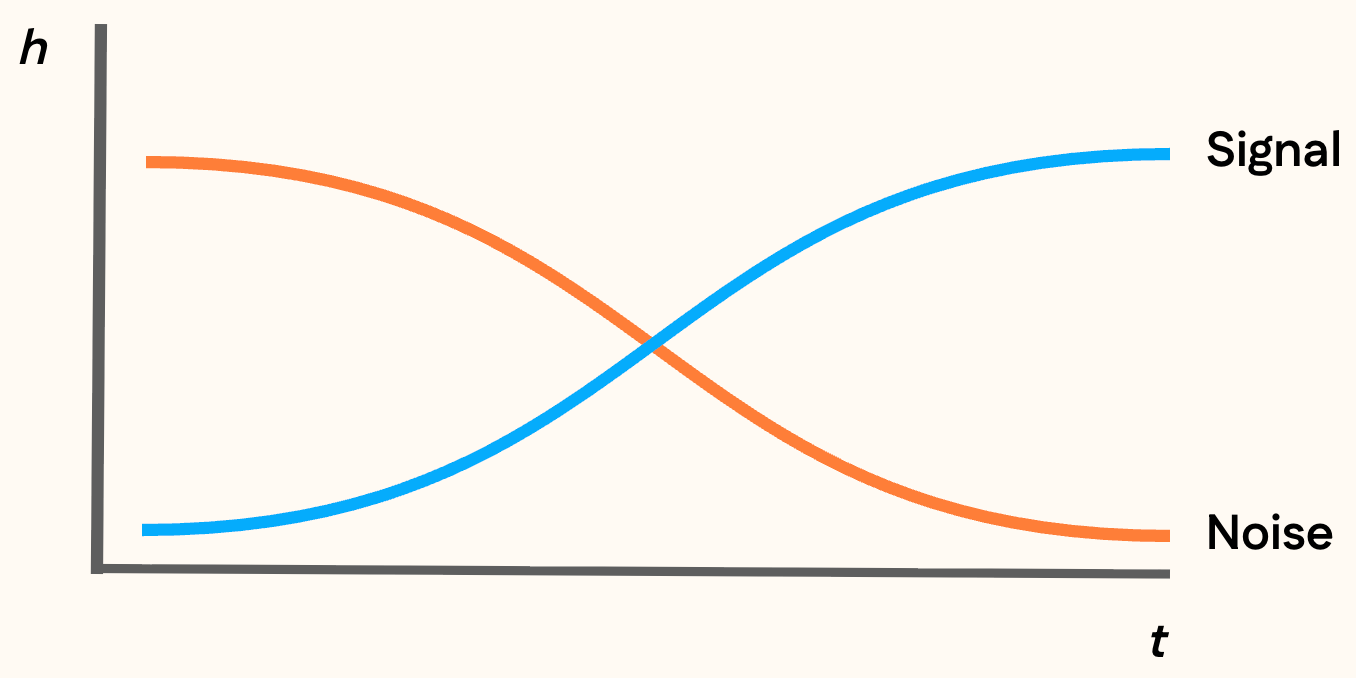
Early in a technology cycle, everyone experiments. Most of those experiments don’t last, which creates a lot of noise. Over time, the experiments that don’t create real value fade away. What’s left is usually signal.
Which Type of Persona Do You Want to Be?
To understand where you want to sit on the curve, the first question is simple but important: Do you want to be an innovator or an early adopter? There are important differences between Innovators and Early Adopters on the Product Adoption Curve.
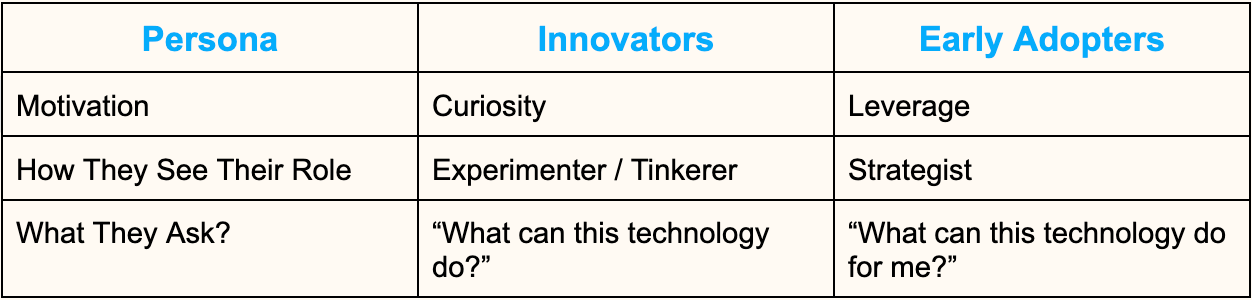
When AI came out, some of my more innovative friends were trying to learn all about the transformer and next token prediction. A lot of that felt like learning TCP/IP during the early internet. I’ve built a lot of successful internet products. I still can’t explain TCP/IP succinctly. It’s too deep in the stack to matter for the leverage I’m trying to create. It made me realize I’m a different persona, and that’s okay. If you’re an early adopter, don’t feel guilty about not being an innovator. Just change your consumption patterns to match.
Should You Be Either of These Personas?
The main way to answer this question is: what is required for your job? AI is still just a tool. Focus on what the tool is useful for in your job or company’s strategy. If you’re responsible for selling AI tooling into the enterprise, you probably need to be an innovator. You can’t have one of your prospects ask about something you haven’t heard about. It would be damaging to your brand.
But let’s think about my job. As a consumer startup founder with the product role, not the technology role, understanding how to build with AI meant I should be an early adopter there. So I forced myself to get Cursor set up and started making changes to our product.
At the same time, there were a lot of innovations happening in AI image and video generation. I didn’t think that was required for my job. I didn’t spend time mastering Midjourney prompts. I just waited until image generation got 100× easier like everyone else.
Where To Sit on the Curve?
If you can intelligently answer whether you should be an innovator vs. early adopter vs. neither, you can figure out how to ride the AI Signal to Noise Curve.
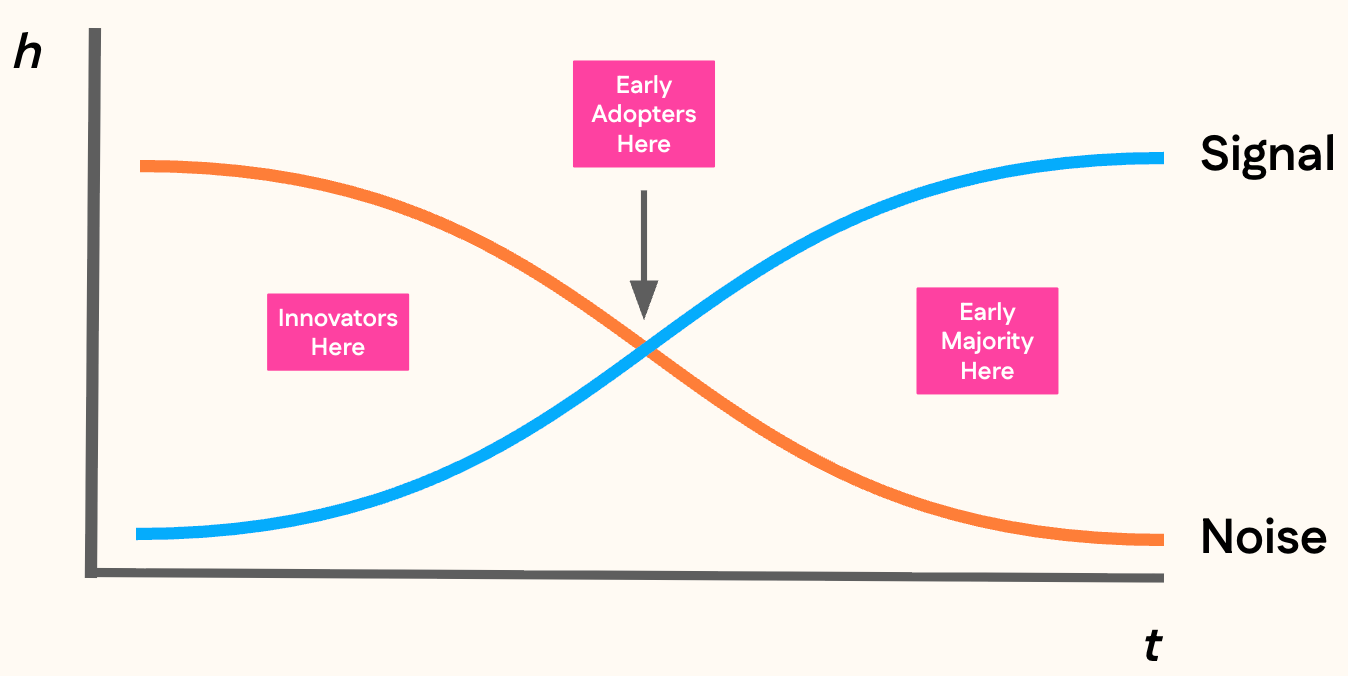
If it’s your responsibility to know a lot about AI in general, like in the previous example, you’re going to deal with a lot of noise, will need to try a lot of things and will spend time on a lot of things that don’t end up being valuable.
If you should be an early adopter, you want to balance signal and noise, and sit right in the sweet spot. If it isn’t relevant for your job, you can wait until it becomes mainstream, because that will correspond usually with a massive decrease in effort to get value from the tool.
The key rule: you shouldn’t sit in the same place on the curve for everything.
The same person can be an innovator in one area, an early adopter in another, and the early majority everywhere else. Let’s take my role again as a startup founder. For my role in setting the vision for an AI product, I need to be an innovator to build the right thing. For how I help build the product, I should be an early adopter. For everything else, I am the early majority.
Let’s see this curve mapped with some major innovations of the last couple of years.
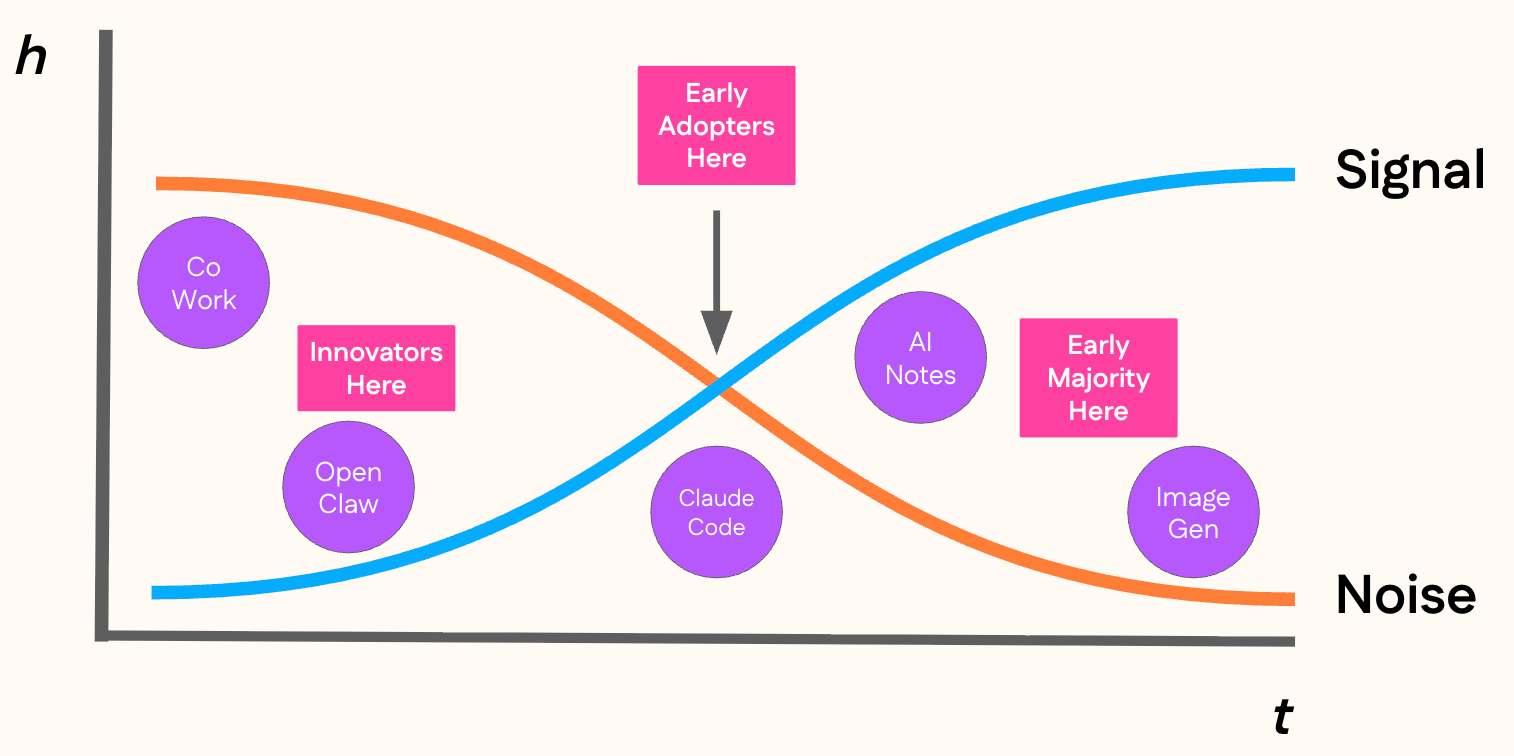
Claude Code crossed into the early-adopter zone for product leaders in the last six months. AI meeting notes and image generation passed that threshold a long time ago. New tools like OpenClaw and Claude Cowork aren’t there yet, but innovators are tinkering with them.
–
AI doesn’t change every week. Capabilities change a few times a year. Everything else is noise. Decide where you want to sit on the curve for each topic, and ignore the rest.
Ask my SuperMe follow up questions, and I’ll probably respond.
Currently listening to my Springs Flings playlist.