

This article was reviewed with the following SuperMe profiles: Sarah Tavel, Ben Silbermann, Eugene Wei, Julie Zhuo, Shishir Mehrotra
One day at Grubhub, we became aware of a site called Grub Canada. Guess what they did? What we did, but in Canadian cities. They were inspired by not just our name, but our website. They copied our HTML directly to build their site. It looked exactly like us. It was very frustrating. It felt like theft. But there was nothing we could really do about it, so we went back to work. We were winning where we did operate, and kept doing so.
At Pinterest, one of our early growth experiment wins was a project called Gift Wrap. We started receiving a lot of traffic from Google, but people were just browsing our content, then leaving. So, when you scrolled past 25 images, we made a change to block you from further scrolling and asked for signup.
Gift Wrap completely changed the growth trajectory of the company, and iteration on that core initial concept fueled a few years of strong growth. Like any great strategy, iterations on it proved less and less incremental over time. So, we looked at what other big players were doing for inspiration. What we learned was disappointing. They all copied us. All the big consumer network products like Facebook, Instagram, LinkedIn as well as vertical competitors like Houzz had copied the Gift Wrap strategy almost to a tee. Same translucent sliders, similar copy. So we didn’t learn much from that exercise.
My past self from either Grubhub or Pinterest would be astonished by what is happening now with AI. Four other startups have copied material parts of the SuperMe product in the last couple of months, from how we structure our navigation, from our core UX comsponents, from the copy we use to describe our value props, to our brand design, to custom icons we build to signify certain sections of the product. These are not vibe-coded weekend projects either. These are all companies that are backed by top venture funds. It’s all so tiresome.
And, of course, we’re not the only ones. It’s just surprising given how new and small we are. Jev, after coming out of stealth after a couple years and going viral, has already been copied by OpenAI, Parallel, and many more even though it’s only been live for a couple of months.
Prior to AI, companies typically copied you when it was obvious you were winning. They were either a competitor who figured out your strategy was extending a lead, or an incumbent responding to a threat that has been determined credible. Now, startups don’t even seem to wait for those signals. Copying is so cheap that competitors no longer need to be convinced things are even worth copying. They can copy first and find out later. They probably should be learning about their own customers instead of us, but they seem to have read different books than I did when learning about competition.
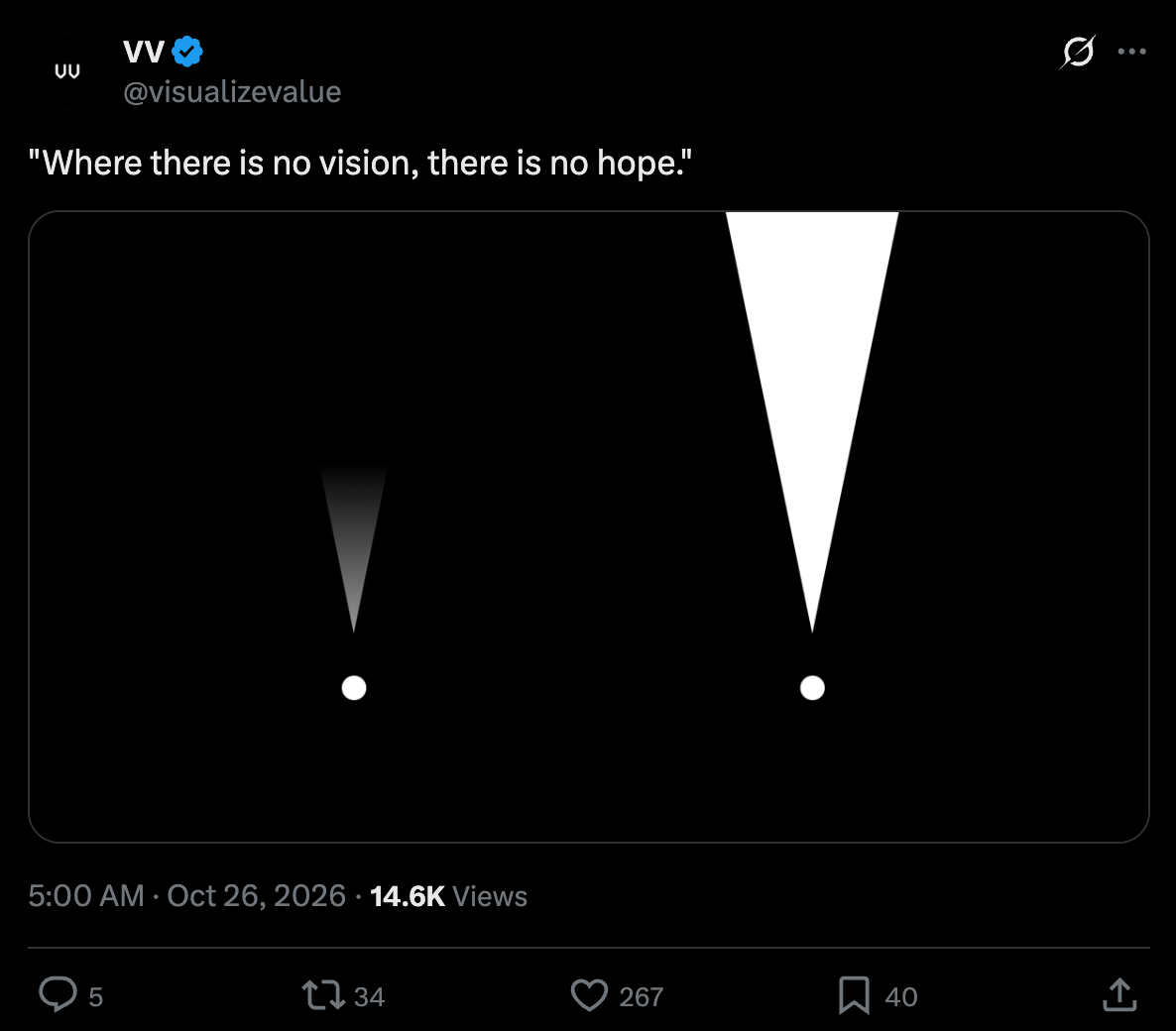
How should you feel in these situations? After initial discomfort, it actually makes you feel good. If other companies are copying your present, they probably aren’t seeing the future. And as Visualize Value says, no vision = no hope. Your ankle biters are unlikely to ever be disruptive.
That might be cope though. While it makes you much more confident they won’t out-invent you, it doesn’t mean you win big. Superior taste is hard to hold onto forever. I’ve seen many companies go on generational runs of shipping and all of a sudden lose their creative spark.
While most builders do not have exceptional taste, the market tends to tell them who does quite quickly. If you pay attention to that signal and blatantly copy, there is a decent chance you copy some of the right things even if you don’t understand why they are the right things. And you may be able to learn why over time.
We saw this with Granola’s insights about not having a bot in the meeting and many other details in notetaking. Once the product broke out, their startup competitors as well as larger companies like Notion and OpenAI just copied their approach. Taste remains very valuable in identifying new opportunities and taking them zero to one, but it doesn’t protect those ideas from others once implemented. If taste is all you have, that may lead to a Red Queen race that barely seems to sustain a lead.
AI makes copying a better tactic, but not necessarily a better strategy. You may be copying a lot of your competitor’s failed experiments too. And copiers tend to get excited by many things they see from other companies and lack focus.
In productivity software, this seems like a cursed model destined to commoditize entire categories. Keeping superior taste up is a difficult and burdensome strategy to execute over a long time. That’s why we focus so much on distribution and other stronger forms of defensibility. With network products, great taste combined with strong distribution or network effects can create a formidable advantage. Superior distribution or network effects can also allow a company with worse taste to beat a company with better taste.
Copying an experience is increasingly easy. Copying what has accumulated through that experience remains difficult. This is why superior distribution strategies, proprietary data and strong networks that compound will be so important for the current and next generations of startups.
This is also why copying works so well for incumbents with scale. Copying a startup as an incumbent works well when the copied behavior can live inside their existing surfaces vs. challenge them. Whether it was Google, Microsoft, or Apple copying Dropbox with Google Drive, iCloud, or OneDrive, or Meta copying stories from Snapchat, those companies reached their audience with a feature before many of their users had seen the initial product. Or clone the product and give it away as a feature to stall that company’s growth. See Stratechery for details.
I wonder if the rise in agentic coding and therefore the decreased cost of copying makes people more or less likely to share what they are doing in public. Jev was in stealth for two years, and their technical approach did not seem to give them much of a lead. Many other companies build in public and get copied quickly after they brag about what they’ve built. Engineering blogs that might have been written to help recruit or just share knowledge now become the blueprint for the coding agent to build a copy from scratch.
Building in public is itself a defensibility strategy when it helps you establish distribution, attract people to your network, or build relationships. That extra attention also draws more competition ready to copy what you have built, so make sure it is worth it. For a startup whose mission is to make the human insight behind the world’s best work available to everyone, we will of course continue to share.
Grub Canada copied our HTML, but not our restaurant network. Facebook copied Gift Wrap, but not Pinterest’s interest graph. The real competitive advantages were never the things that were easiest to copy.
Currently listening to Melting Days by Lusine.